The Honey Ant Reading Program

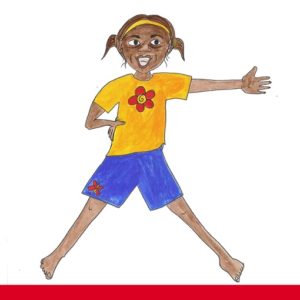
Book 11 - Run Goanna, Run

Book 11 - Run Goanna, Run

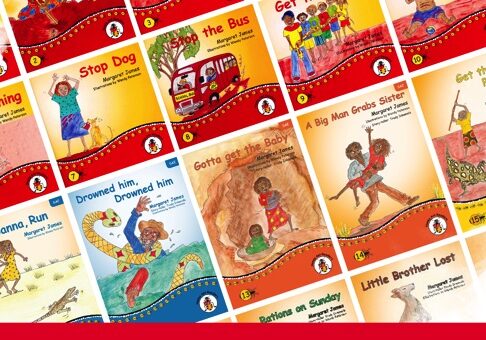
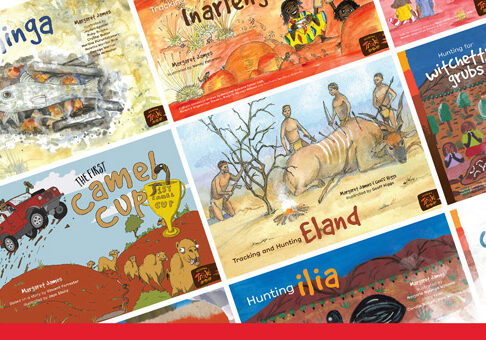
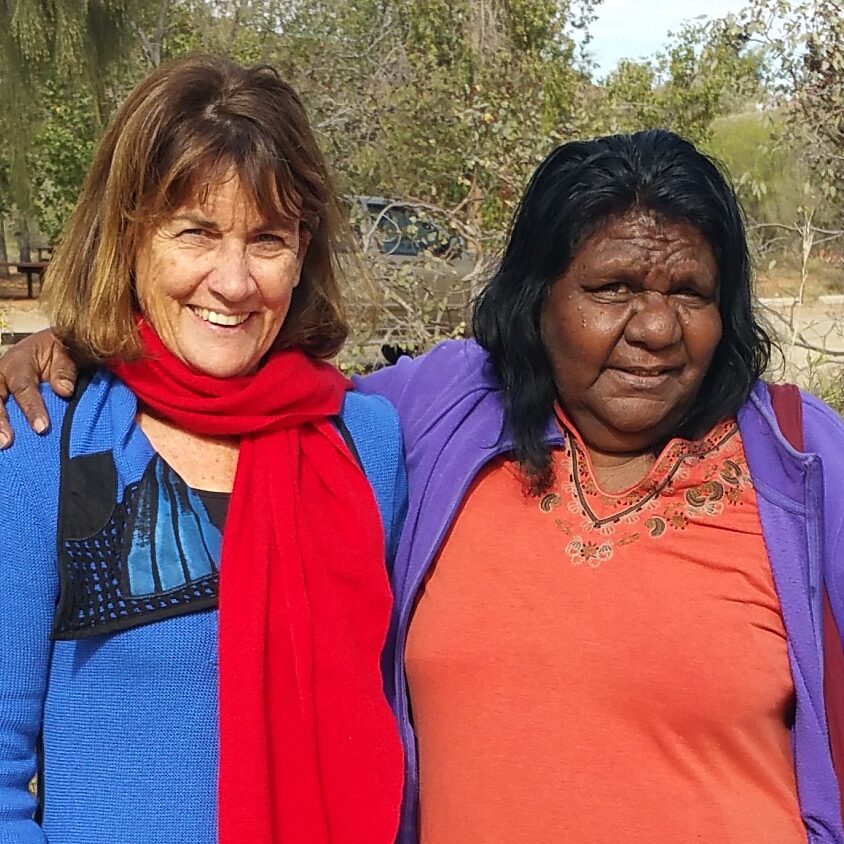
This program includes a series of 20 Honey Ant Readers, written by Margaret James, illustrated by Wendy Paterson and edited by Rosemary Butler, which were developed in consultation with Indigenous elders in Alice Springs, and with their full support.

The HAR program was motivated by a desire to improve the literacy levels amongst Indigenous students, particularly those in remote areas, and to compensate for the lack of appropriate early reading material for them.

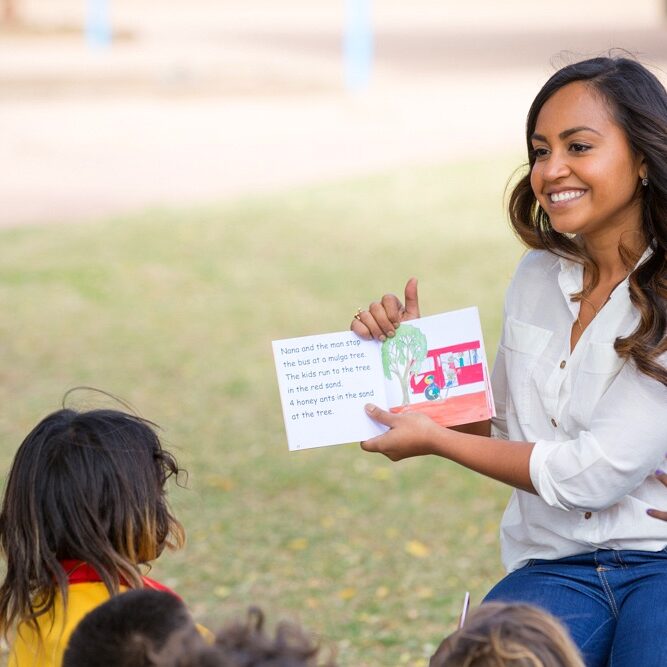
Its purpose is to assist Indigenous-language speakers (including Aboriginal English speakers) in Central Australia with their early print literacy learning.

The desired outcome of the program is reading, rather than the acquisition of Standard Australian English (SAE), although this will happen naturally as the students progress through the series of books. (Particularly if they sing the SAE songs and recite the SAE rhymes at the back of each book regularly).

Once people can read, they can readily transfer that skill to reading in another language, such as SAE or Indigenous languages.

Note:

  • SAE: refers to Standard Australian English.
  • AE: refers to the Aboriginal English spoken in Central Australia.

Catering for Indigenous Language Speakers

Themes and stories have been developed which are consistent with the learner’s knowledge and experience of the world, way of storytelling and culture.
The language of The Honey Ant Readers moves from Aboriginal English (AE), the oral language the learners hear and speak, to colloquial Standard Australian English over 20 books.

Aboriginal English

The language the students share in the playground is Central Australian Aboriginal English. Many of these students use AE as a second first-language. Learning to read in first language has known cognitive benefits. The words make sense. Legitimising a student’s first language results in improved confidence, heightened self esteem, a feeling of security and well-being, and thus enhanced academic success.

The differences between SAE and AE in terms of Syntax (grammar); Phonology (pronunciation); Semantics (meanings); Lexicon (vocabulary) and Pragmatics (how is it used) are considered. These are discussed briefly in the rationale at the back of each book and in detail in The Honey Ant Readers Teacher’s Handbook accompanying The Honey Ant Readers.

Phonological Awareness

Studies show that awareness of sounds in words is highly correlated with reading ability. The first books in the series draw attention to individual sounds by only introducing phonic words; words in which there is a one-to-one correspondence between the letter and the sound, for example d-i-g. The first 4 readers contain only the SAE short vowel sounds. From Reader 5 the long SAE vowels are gradually introduced and finally, from Reader 9, the SAE diphthongs are included. From Reader 13 all SAE vowel sounds are used.

As The Honey Ant Readers progress in difficulty, non phonic words are introduced. The consonants in the books are chosen according to which sounds AE speakers are familiar with. The consonant sounds which are found in Central Australian languages are introduced first.

Compounding Vocabulary

600 new words are progressively introduced into The Honey Ant Readers over 20 books, and once introduced are repeated frequently. The series starts with 7 words in Reader 1.

Songs and Rhymes

There are songs or rhymes at the end of each book, in SAE,  to reinforce the vocabulary, specific pronunciation or an aspect of grammar focussed on in that particular book. Songs and rhymes are a fun and productive way to learn, and are known to assist in the acquisition of language skills.

Focus on Decoding and Grammar

In order to realise the outcome of reading, a learn-to-read program has been developed in conjunction with The Honey Ant Readers, which includes resources for teachers. Learning English as an Additional Language is more successful if learners are explicitly taught the grammar. Resources to help the teacher to do this are included in the supplementary materials. There are also materials for teachers which support preparation for reading;  assisting in decoding, in developing an awareness of the presence of vowels and consonants in words and in an awareness of the different sounds the same ‘letter’ may represent.

Teacher’s Edition

The Honey Ant Readers 1 -10 have separate Student and Teacher editions. The story, word lists, songs and rhymes are identical in both editions; however the Teacher’s copy includes a rationale at the end of the book. Explanations about various aspects of the book, such as the vocabulary, grammar and punctuation used, are included in the rationale. Readers 11 – 20 have a single edition for both students and teachers, which includes teacher’s notes at the back of the book.

Supplementary Materials

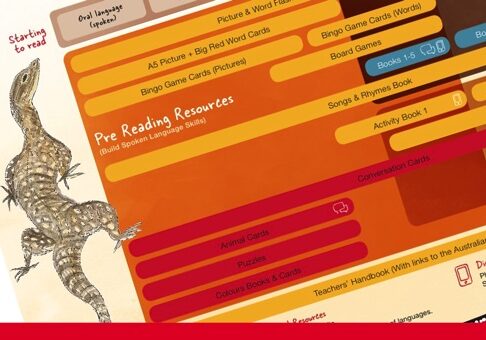
Supplementary materials which support The Honey Ant Readers include:

  • The Honey Ant Readers Teacher’s Handbook: This details the rationale underpinning the books and the reading program.
  • 4 Workbooks with activities to support and reinforce the material in the Readers: These complement Books 1 – 5; 6 – 10; 11 – 15 and 16 – 20 respectively.
  • The Honey Ant Readers Song and Rhyme Book: Using this book will support the acquisition of oral SAE*. A detailed index indicating aspects of grammar and pronunciation is included to assist the teachers in the efficient use of this book.
  • A Picture, Number and Word Card Pack. (180 cards). This contains sets of cards which can be used to prepare the students for reading, to familiarise them with specific words and numbers up to 10, to help with decoding words, and to teach basic grammar and structure of SAE. Memory card games also offer the irresistable opportunity of beating their teacher!

Professional Development

Training for teachers and ancillary staff in the delivery of the reading program is highly recommended. Other topics which Margaret is happy to offer PD in, are:

  • The rationale supporting the HAR program.
  • Delivery of the HAR program.
  • Adapting HAR to suit your learners.
  • Teaching reading.
  • Aboriginal English.
  • Language acquisition.
  • Developing readers to suit your community.

Resources

  • HONEY ANT READERS 1 -10 Teacher’s edition
  • HONEY ANT READERS 1 -10 Student’s edition
  • HONEY ANT READERS 11 – 12 One edition
  • HONEY ANT READERS 13 – 20 One edition (Available shortly)
  • RESOURCES PACK
  • TEACHER’S HANDBOOK (Available shortly)
  • SONGBOOK (Available shortly)
  • ACTIVITY BOOKS 1,2 3, 4 (Available shortly)

Orders and further information

Get in touch via email:

(required)
 
(required)
 
(required)
 
 
(required)